
There is a point every autumn when the roadsides and field edges get better looking than most gardens. The goldenrod goes over all at once, the mistflower comes up underneath it in that soft dusty blue, and the grasses go to seed and catch the light. It lasts a few weeks and then it is gone.
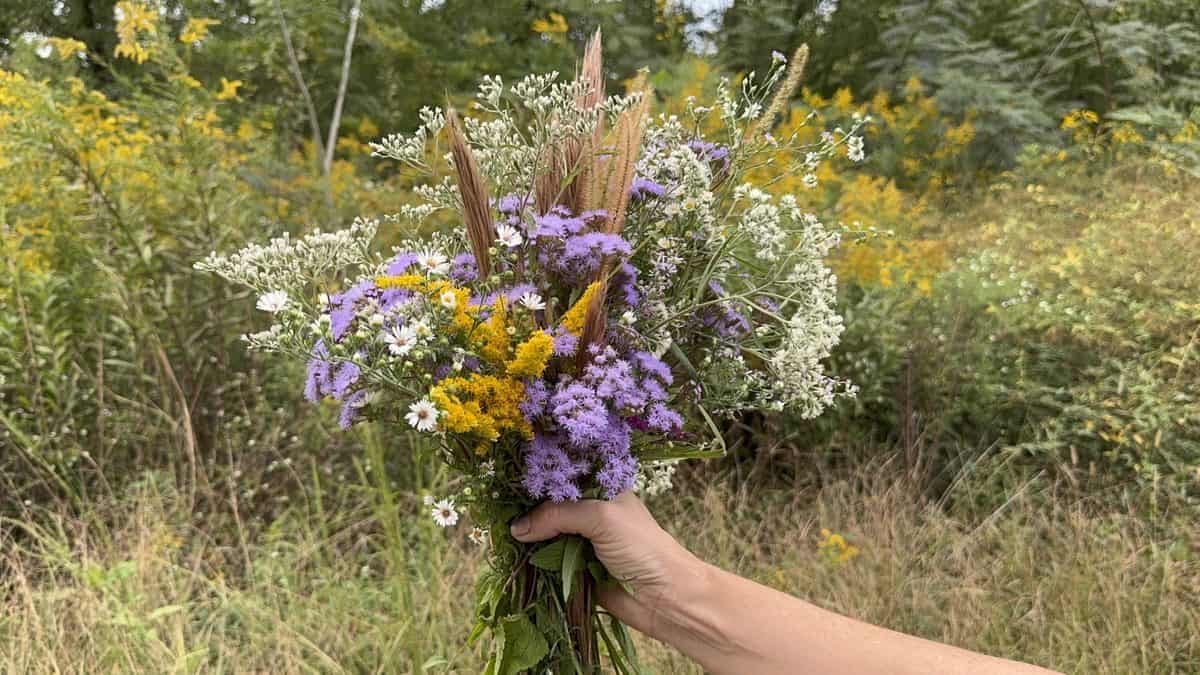
Last fall we went out with a pair of scissors and came back with the bouquet in these photos. None of it was planted, none of it was bought, and the whole thing took about twenty minutes. This is how to do the same thing where you live.
Walk the whole patch before you cut anything
The instinct is to stop at the first good thing you see and start cutting. Resist it for ten minutes and walk the edge of wherever you are first.
You are looking for two things. What is genuinely abundant, and what is only here and there. That walk is what tells you which plants you can take from freely and which ones to leave alone, and it also shows you the range of what is available before you have committed to an armful of the same yellow flower.
Only cut where there is plenty
This is the one rule worth being strict about. If you find a stand of something running twenty feet along a fence line, taking a dozen stems makes no difference to it at all. If you find three of something, leave all three.
A patch that gets picked lightly comes back thicker. A patch that gets stripped does not come back at all, and the seed it would have dropped goes with it.

The goldenrod above is a good example of what abundance looks like. What came home was a handful. What stayed was most of a hillside.
A few other things worth respecting. Some public land prohibits picking entirely, and posted land is posted. If you are not sure whether you are allowed to cut where you are standing, that is your answer.
Build the bouquet on contrast, not on colour
This is where most gathered bouquets go wrong. People pick the prettiest flower they find, then pick nine more of it, and end up with a fistful of one thing that reads as flat.
What makes a wild bouquet look intentional is contrast, and there are four kinds worth hunting for.
Colour. Two or three that sit well together, plus something that breaks it up. In the fall bouquet the blue mistflower and yellow goldenrod sit opposite each other on the colour wheel, and the white asters keep them from fighting.
Size. You want a few large heads to anchor the middle and a lot of small ones to fill around them. All large is heavy. All small is fussy.
Shape. Think in silhouettes. Flat clusters like boneset, loose sprays like goldenrod, tiny daisies like the asters, and something upright to break the outline. Mixing three or four shapes does more for a bouquet than adding another colour.
Texture. The most overlooked one and the easiest win. Seed grasses, dried plumes, a few green leaves. They give the eye somewhere to rest between the flowers.

If you come back with nothing but flowers, the bouquet will look like less than the sum of its parts. The grasses and seed heads are what make it look like it came from somewhere.
Bring something sharp
Scissors are easiest. A pocket knife works just as well and is usually what is already in your pocket.
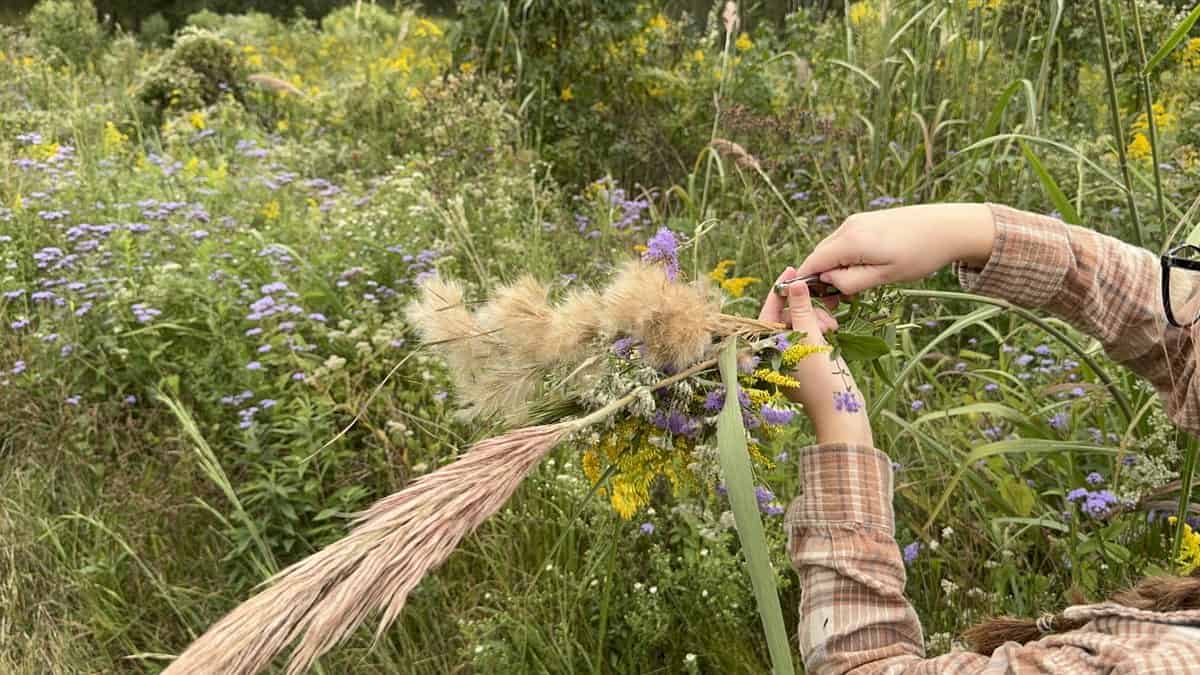
What matters is that you cut rather than pull. Tearing a stem crushes the channels the plant draws water through, so a torn stem drinks badly and wilts early. Pulling is worse again, because on shallow rooted plants you take the whole thing out of the ground rather than just the flower.
Cut on a slant, and cut longer than you think you need. You can always shorten a stem at the sink. You cannot add three inches back.
Getting them home without losing half of them
Heat is what ruins gathered flowers, not time. Twenty minutes in a warm car will do more damage than two hours in the shade.
Take a jar with an inch of water if you are driving anywhere. If you are walking, wrapping the cut ends in a damp cloth or even a wet paper towel in a bag is enough. Keep the bunch out of direct sun on the way back.
Soft stemmed things go first. Anything with a woody stem, and most grasses, will forgive you a lot more.
Give them an hour before you arrange them
When you get home, strip every leaf that would sit below the waterline. Leaves left underwater rot quickly and foul the water, which is the usual reason a bouquet goes off in three days instead of eight.
Recut each stem at an angle, then stand the whole bunch in deep cool water somewhere dark for an hour or two before you arrange anything. They will take up a surprising amount and firm up noticeably. Arranging straight away, while everything is still limp from the walk, is how you end up rearranging it the next morning.
What each season actually gives you
The two ends of the year want different things from you.

Spring is small and fine. Ragwort, buttercups, clover, the pale spires of lyre-leaf sage. Everything is short stemmed and delicate, the colours are clear and bright, and the bouquets want to be smaller and tighter. The bunch above is barely bigger than two hands.
Autumn is the opposite. Long stems, big loose heads, muted colours, and all the seed texture you could want. You can build something twice the size with half the stem count, and it will dry in place rather than collapsing, which means a fall bouquet often looks good for weeks after it has technically stopped being fresh.
Go before it is gone
The best wildflower picking is almost always a two week window, and it is different everywhere. The only way to catch it is to keep an eye on the ground you pass regularly and go the week it looks right, rather than the week you get around to it.
Take the scissors. Cut where there is plenty. Get some grass in there.