

Where do tomato worms come from? Tomato worms or tomato hornworms are the larvae of two Manduca genus hawkmoths. These moths are native to North America and target species in the Solanaceae family including tomatoes and tobacco. They are seasonal pests that cause significant damage. In this article, we will have a look at where these pests come from, and how you can control them.
Where Do Tomato Worms Come From?
The tomato hornworm, Manduca quinquemaculata, is also known as the 5 spotted Hawkmoth. The closely related Tobacco hornworm, Manduca sexta, also targets tomatoes and has a very similar lifestyle and feeding strategy – hence the two are often confused. The tobacco hornworm is more of a tomato pest in the south of the North American continent, while the Tomato hornworm is more prevalent in the north.
The female moths, after mating, lay eggs near the growth shoots of young tomato (brinjal and peppers as well) plants. The eggs hatch after a few days and the caterpillars feed on young soft shoots. Caterpillars grow via instars – so they have to shed their skin each time to grow, a process called molting, and after each molt, they get a bit bigger. We will have a look at how neem oil helps us control these caterpillars later with an understanding of this process.
Once the caterpillars get a bit bigger, they can eat mature leaves, and even stems, and they just make a general mess of your plants. As the caterpillars get bigger the horn on their tail gets bigger and it becomes clear why they are called hornworms. The final instar will basically strip your plant of all foliage as these are now big caterpillars in the 3.5-4 inch size range.
Once they are finished growing, the caterpillar will leave the plant, pupate in a cocoon and then emerge as an adult moth. The moth will burrow somewhere in the ground and overwinter.
With an understanding of this life cycle, we can control the pests a bit more effectively.
Where Do Tomato Worms Come From and Where Do Hornworms Live?
Very early-stage caterpillars tend to cluster near growth shoots, but as they get older they can go and hide somewhere during the day and emerge to feed at night. As the caterpillars get older they accumulate more and more toxins from the tomato plant and some predators know not to eat them. As a result, they can sometimes get quite bold, but normally you can find them most effectively at dusk, to the early hours of the evening.
The mature caterpillars pupate near the plants, typically in the soil or upper compost layer. After the adults emerge from pupae, they will find someplace sheltered to overwinter, and then they will emerge in spring to spread eggs and chaos. The adults feed on nectar from plants pollinated by moths (low-sugar nectar flowers).
How Do Tomato Worms Find Tomato Plants?
The simple answer is their mother does, when she is a moth, lays eggs and the eggs hatch and the worm finds itself right there on a tomato plant. However, what we really need to know is how the mother moth finds the tomato plants!
Hawkmoths have incredibly sensitive antennae – for some really nice pictures of these chemical sensors have a look at these graphics. Tomato plants and various other plants in this family produce quite a distinctive bouquet of terpenes and other chemicals that are easily detected by the moth. For most insects and herbivores, these terpenes help tell the potential tomato leaf eater that the leaves are toxic. However, the Tomato worm is resistant to the various poisons in the tomato and actually accumulates these as it grows to allow it to repel predators.
So, the mother hawk moth finds the tomato by smell and then lays her eggs around the plant’s growth shoots.
Sign of Hornworm Infestation
The first sign of hornworm infestation is when you notice the stems of your tomato plants are leafless. The awful part is that hornworms won’t just feed on patches of your tomato leaves. They can devour your whole leaves in just a night.
Tomato hornworms begin by feeding on the upper part of your plant leaves. After consuming your tomato leaves, they can proceed to feed on your flowers and fruits.
As they mature and grow bigger, the damage they cause to your tomato leaves increases.
The tomato hornworms can camouflage with their green appearance. Therefore, you might not spot them on time until they have been harmed. You can catch them doing their notorious operations when the sunsets (in the dark).
How to Get Rid of Tomato Hornworms
Here are the elimination methods for tomato hornworms:
- Hand-picking and drowning: handpicking and drowning them in a bucket of water is the most effective and safe way of eliminating these worms.
- Bacillus thuringiensis (Bt): Many commercial formulations of this biocontrol exist. The bacteria will kill the caterpillars and multiply, setting up residence in the soil and helping to extend control.
- Neem: You can spray the young caterpillars with neem – this inhibits their growth and kills them.
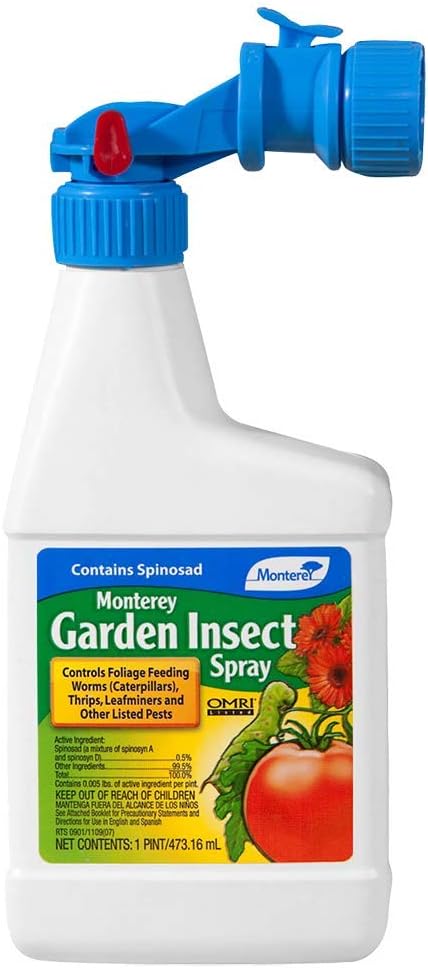
Monterey LG6130 Garden Insect Spray
Read more about The best Soil for Tomatoes
Does Neem Oil Kill Tomato Worms
Yes. If you spray it on the larvae it inhibits the enzyme that allows the larvae to shed their skin during molting, which causes the larvae to be trapped in their skin and die. I use a neem oil product similar to this one to control a very similar hawk moth to the tomato hornworm. After a few days, you will find the slightly miserable caterpillars curled up on the ground below the plants. It is most satisfying to just squash these with your feet.

Here we can see a hornworm with parasitic wasps emerging from it – a most delightful sight. Each one of those baby wasps will go and kill more hornworms!!
Hornworm Predators
Various birds will eat hornworms. Chickens and ducks will do this. My favorite method of insect and snail control is a combination of bantam chickens and muscovy ducks. Both will convert pests into eggs, meat, and manure. Bantam chickens will also turn your soil over and their little feet somehow make the soil more magical.
There are also a few parasitic wasps that lay eggs in the caterpillars and subject them to a most satisfying and gruesome death. The wasp larvae live inside the caterpillar and eat it. I love parasitic wasps and introduce biocontrol wasps whenever I can get them for any pest. Sadly the biocontrols for hornworms have not been commercialized yet, so we will have to wait a few years before we can subject these irritating pests to gruesome deaths.
Humans are effective predators – go to your tomato plants at night with a black light (UV). The light makes the caterpillars glow a bit and they are quite easy to see. Pick them off the plants and place them in a jar – feed them to your chickens in the morning. If you do not have chickens, dispose of them.
Conclusions on Where Do Tomato Worms Come From
They are endemic hawk moths, with the female moths laying eggs on growth shoots at night.
To ensure you protect your tomato plant from hornworms do the following:
- Always inspect your tomato plants for hornworms during early summer.
- If you see any worms on your plant, pick them or remove them.
- Ensure to always till the soil after harvest and also in early spring to destroy any burrowing larvae and caterpillars. A rotavator really helps.
- Chickens are another excellent caterpillar control system. They will scratch around in the soil and find pupae and caterpillars and eat them converting a problem into eggs and chicken.
Hornworms are not only seen in tomatoes. They can also be found in pepper, eggplant, and potato.
FAQs
[wp-faq-schema title=”FAQs” accordion=1]

Eunice is a gardener who loves to play in the dirt. She starts her day early in the morning, watering her plants and tending to her garden. She loves the smell of freshly cut grass and the feeling of sunshine on her back as she works. She‘s a master at creating beautiful flower arrangements and can often be found humming a tune as she tends to her plants. When she‘s not gardening, she loves to read books about nature and share her knowledge with others. Eunice loves gardening so much that she‘s even been known to talk to her plants!